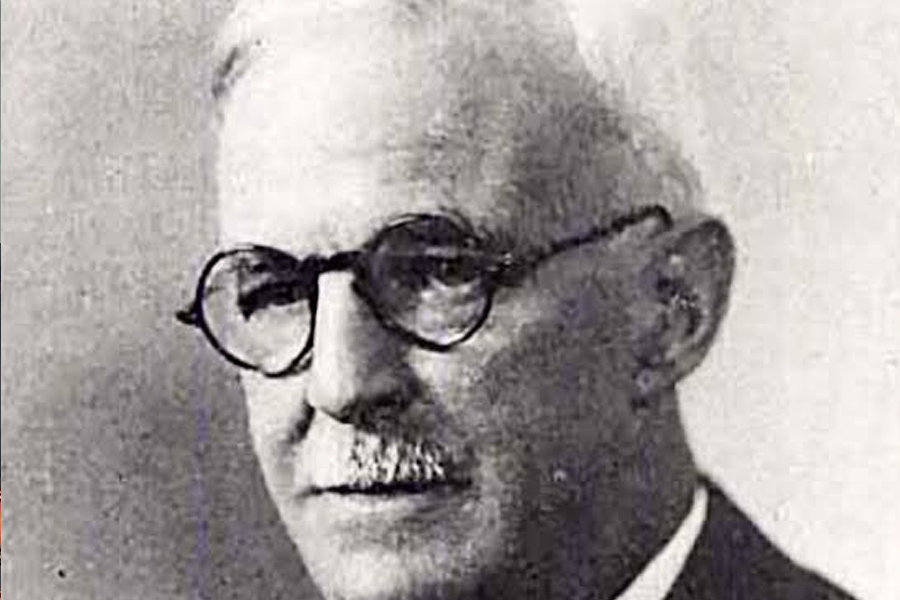
John Kenneth Ronald Murray (Jock or J.K.R. Murray) had numerous lifetimes. He was a husband, British Army lieutenant colonel, military intelligence specialist, Government Communications Headquarters officer, and one of the most esteemed Scottish coinage scholars. He worked in quiet records offices and auction rooms where Scotland’s history might be read in silver, gold, and copper after serving in India and the Near East.
His life was captivating because it combined discipline and curiosity. He utilised his intelligence work patience to recreate complicated coin series, identify unusual variants, and track Scottish money through government archives and surviving collections.
Childhood and Family Background
John Kenneth Ronald Murray was born in Southsea, Hampshire, on June 29, 1910. While his father worked in Egypt, his maternal grandmother may have taken the family to Cheltenham. Kent George Veitch Murray and Muriel Harriott Herapeth Bott were his parents. Both parents were 27 when John was born.
The Murray family was Scottish, related to the Aberdeenshire Murray of Mastrick family. This relationship became important to Jock later in life when he studied Scottish history and currency. Genealogical records show he had three siblings, although specifics are scarce.
His early education took place at Wellington College, where he studied from 1924 to 1928. He then entered the Royal Military Academy Sandhurst. In September 1930, at the age of 20, he received his commission into the British Army.
Army Service and Military Intelligence
After a year attached to the 2nd Battalion of the Duke of Wellington’s Regiment, Murray joined the 2nd Battalion, 4th Bombay Grenadiers, later known as the Indian Grenadiers. His early service took him through several locations in India, including Ahmednagar, Manzai, Wana, and Rawalpindi.
He learned administration, field operations, languages, and regional affairs in the army. He then worked in military intelligence, which needed attentive observation and imperfect information interpretation. He passed the Russian interpretership exam in 1937 and 1938 in Estonia. This success showed his intelligence and the strategic value of language abilities at a politically uncertain time.
During the Second World War and its aftermath, he served in the Near East and India. In 1946, he was seconded to the War Office. He retired from the Army in October 1948 after 18 years of service, holding the rank of lieutenant colonel.
The classified nature of intelligence work obscures some of his duties. Military intelligence clearly affected his thinking. He learned to scrutinise evidence, identify false details, and piece together a story from little hints. Later, his numismatic studies focused on those habits.
Work at GCHQ and Life After the Army
After leaving the Army, Murray joined GCHQ. His first period there lasted until ill health forced him to retire in 1952. He underwent two major operations and spent several years recovering.
He relocated to Priorscroft on 14 Nethergate in Crail, Fife, in 1952. The move brought him closer to Scottish vistas and records that would influence his work. Crail provided a peaceful atmosphere for local history, burgh records, and Scottish coinage research.
His health eventually improved, and in 1962 he returned to GCHQ. He continued working there until his final retirement in 1971. He later lived near Cheltenham, including at Uckington in Gloucestershire. He died at Uckington on 8 November 1986, aged 76.
Marriage to Joan Clarke
Around 1947, Murray met Joan Elisabeth Lowther Clarke at GCHQ. Joan was a famous mathematician and codebreaker. She was the sole woman in Hut 8 on Naval Enigma at Bletchley Park and became an expert in Banburismus, a challenging cryptanalytic procedure.
Joan was born on 24 June 1917, the daughter of Canon William Kemp Lowther Clarke. She studied mathematics at Newnham College, Cambridge, where she achieved a double first. Her wartime and postwar intelligence career made her one of the most remarkable women associated with British codebreaking.
John and Joan married on 26 July 1952 in Chichester Cathedral. The ceremony connected naturally with Joan’s family, since her father was associated with the cathedral, and the Bishop of Chichester officiated. They had no children.
Their marriage was based on intellectual interests, not public show. John sparked Joan’s numismatic interest. They researched Scottish history, archives, collections, and local documents. Their partnership was domestic and academic. Jock supplied years of collecting and researching experience, while Joan brought mathematical precision, attention, and the ability to organise complex material.
After Jock’s death, Joan moved to Headington in Oxfordshire. She continued her research and remained active in numismatic circles until her death on 4 September 1996.
From Military Collecting to Scottish Coins
Murray’s interest in collecting began during his Army years. He collected medal ribbons and acquired medals from Indian princely states through military contacts. He also joined the Orders and Medals Research Society.
For a time, he concentrated on English milled gold coins. That collection was sold at Glendining’s on 1 October 1952. Around 1964, he turned his attention decisively toward Scottish coinage, particularly issues from the reign of Mary, Queen of Scots, through the reigns of Charles I and Charles II.
In 1963, he became secretary and treasurer of the Cheltenham Numismatic Society. The Royal Numismatic Society accepted him in 1965. His studies went beyond visual comparison. He examined mint records, archive data, hoards, die variants, countermarks, and issue histories.
He published in top numismatic magazines from 1966 until 1984. He wrote about Stirling bawbees of Mary, Scottish gold coins of the 1550s and 1560s, Charles I and Charles II’s gold and silver coins, James VI billon issues, copper coins from 1642 to 1697, Jacobite touchpieces, and countermarked coins.
His 1970 study of Charles I gold and silver coinage was especially important. It restored order to a series that had previously been confused and difficult to classify. He also left extensive unpublished work on Mary, Queen of Scots, and James VI.
In 1977, he presented his collection of Eastern Baltic coins to the Ashmolean Museum. In 1983, the British Numismatic Society made him an honorary member.
Jock Murray and Ian Stewart
Murray’s close scholastic friend was Ian Stewart, subsequently Lord Stewartby. Stewart was an expert in mediaeval English and Scottish coins. The two individuals corresponded regularly, discussed each other’s theories, and believed coins should be studied as historical evidence rather than valued things.
Part of their cooperation worked because their interests matched. Stewart focused on early Scottish coins, whereas Jock focused on Mary, Queen of Scots and later. This intellectual community included Joan Clarke, who focused on later medieval Scottish rulers’ coinage.
Stewart described Murray as a discerning collector, dedicated student, cheerful companion, generous collaborator, and courageous man who remained uncomplaining despite serious illness. He later wrote Murray’s obituary, preserving a vivid picture of both the scholar and the friend.
Stewart’s own research included The Scottish Coinage, first published in 1955 and revised in 1967, as well as the major study English Coins 1180 to 1551, published in 2009. His work on Scottish coinage, Anglo Saxon and Viking issues, hoards, mint practices, and die studies helped create a framework in which Murray’s later Scottish research could be understood.
The two numismatists had more than professional admiration. Knowledge exchange was ongoing. They were from various eras and focused on diverse things, but they believed meticulous classification could turn scattered materials into a coherent historical record.
The Murray Collection and Lasting Reputation
Murray collected many Scottish gold and silver coins. A few months after his death, Spink auctioned the primary collection in 462 lots on 29 April 1987. It included 828 pieces of Scottish coinage from David I to James VIII. Later sales included the remaining pieces.
His fame was built on his coins and his queries concerning them. He considered coins as little historical documents. Letters, mint marks, portrait details, and unique spellings can disclose an engraver, mint operation, or ruler’s political demands.
His career exemplifies how private scholarship may change a field. No university chair or renown were his goals. He meticulously examined records, collections, and comparisons. He was the most distinguished modern student of later Scottish coinage after the nineteenth-century foundational scholars due to his studies.
Family Members at a Glance
| Family member | Relationship to John Murray | Known details |
|---|---|---|
| Kenneth George Veitch Murray | Father | Worked in Egypt during part of John’s childhood |
| Muriel Harriott Herapeth Bott | Mother | John’s mother, recorded as 27 at his birth |
| Murray family of Mastrick | Scottish ancestry | A family connection associated with Aberdeenshire |
| Joan Elisabeth Lowther Clarke | Wife | Bletchley Park cryptanalyst, mathematician, GCHQ officer, and numismatist |
| William Kemp Lowther Clarke | Father in law | Canon connected with Chichester Cathedral |
| Ian Stewart, Lord Stewartby | Close colleague and friend | Leading Scottish and medieval English numismatist |
FAQ
Who was John Kenneth Ronald Murray?
John Kenneth Ronald Murray was a British Army lieutenant colonel, military intelligence specialist, GCHQ officer, and leading scholar of later Scottish coinage. He was also the husband of Joan Clarke, the Bletchley Park cryptanalyst.
When did John Murray marry Joan Clarke?
John Murray married Joan Elisabeth Lowther Clarke on 26 July 1952 in Chichester Cathedral. They had no children and remained closely connected through their shared interest in history and numismatics.
What coins did John Murray study?
He specialized in later Scottish coinage, especially coins issued from the reign of Mary, Queen of Scots through the reigns of Charles I and Charles II. He studied gold, silver, billon, copper, countermarked pieces, and Jacobite touchpieces.
What was John Murray’s connection with Ian Stewart?
Murray and Ian Stewart were close colleagues and friends. They corresponded regularly, exchanged research, and divided their interests across different periods of Scottish coinage. Stewart focused more heavily on earlier issues, while Murray concentrated on later Scottish coinage.
Where did John Murray live?
He lived in Crail, Fife, after 1952, at Priorscroft on 14 Nethergate. Later, he lived in the Cheltenham area, including Uckington in Gloucestershire, where he died in 1986.
What happened to his coin collection?
His principal Scottish collection, consisting of 828 gold and silver coins, was sold by Spink on 29 April 1987 in 462 lots. Other pieces were sold later, while his Eastern Baltic collection had already been presented to the Ashmolean Museum in 1977.