Charles Godefroi Sophie Jules Marie de Rohan was born into one of Europe’s most powerful and complex families. Although he lived barely five months, his birth linked the French aristocracy, the exiled Stuart monarchy, the Polish Sobieski royal line, and the political world of the 1745 Jacobite insurrection.
He was born in Paris on 28 July 1748. Publicly, he was recognized as the son of Jules Hercule Mériadec de Rohan, Prince of Guéméné, and Marie Louise Henriette Jeanne de La Tour d’Auvergne. Privately, however, family correspondence and later historical tradition identified Charles Edward Stuart, known as Bonnie Prince Charlie, as his biological father.
The infant’s story is therefore not simply a genealogical curiosity. It is a small but revealing episode in the history of European dynastic families, where marriage, reputation, political loyalty, and private affection often existed in uneasy balance.
A Child Born Into a Powerful House
Charles Godefroi was born when aristocratic status depended on family name and public prominence. Marie Louise de La Tour d’Auvergne, his mother, was from the noble House. Charles Godefroy de La Tour d’Auvergne, Duke of Bouillon, was her father, and Maria Karolina Sobieska, a granddaughter of Polish monarch John III Sobieski, was her mother.
Charles Godefroi was related to French and Polish royalty through his mother. He was tied to the Jacobite throne claim through the Stuarts. Since his mother and biological father families were tied through the Sobieski line, his birth was part of an extremely intimate dynastic web.
Jules Hercule Mériadec de Rohan, Prince of Guéméné, was his acknowledged father. The Rohan family was a powerful French noble house. Its members had high social status and intimate ties to the royal court, Church, and foreign politics. Since the family supported Stuart, Marie Louise and Charles Edward’s relationship was exceptionally difficult.
For public purposes, the child was treated as a legitimate Rohan. That recognition protected the honor of Marie Louise, preserved the standing of the Rohan family, and avoided a scandal that could have damaged several prominent houses at once.
Marie Louise de La Tour d’Auvergne
Marie Louise was born on 15 August 1725. She grew up amid the strict expectations placed upon a high born woman. Her marriage was not merely a personal union. It was part of a wider strategy involving inheritance, prestige, political alliances, and the preservation of family influence.
In 1743, she married Jules Hercule Mériadec de Rohan, Prince of Guéméné. Through this marriage she became Princess of Guéméné and entered the inner world of French aristocratic society. Her new family was wealthy, well connected, and openly sympathetic to the exiled Stuart dynasty.
Marie Louise was Charles Edward Stuart’s first cousin. Her and Charles Edward’s mothers, Maria Karolina and Maria Clementina, were sisters. Marie Louise and Charles Edward were extended family, but courtly life and political exile kept them apart until the late 1740s.
The affair may have begun during Charles Edward’s tough years after the Jacobite defeat. His 1745 expedition failed in Culloden in April 1746, ending his aspirations of restoring the Stuart monarchy. In France, he lived with sympathetic aristocrats.
While serving in the military, Marie Louise’s husband was away. The circumstances allowed a hidden romance. Family loyalty surrounded the close, hazardous affair. In aristocratic culture, discreet extramarital affairs were common, but pregnancy was much worse.
The child born to Marie Louise in July 1748 was presented as her husband’s legitimate son. The choice was crucial. Publicly acknowledging Charles Edward’s paternity would have shamed Marie Louise and cast doubt on the child’s status. It may have embarrassed the Rohan family and strained relations with the Stuarts.
Charles Edward Stuart and the Jacobite Connection
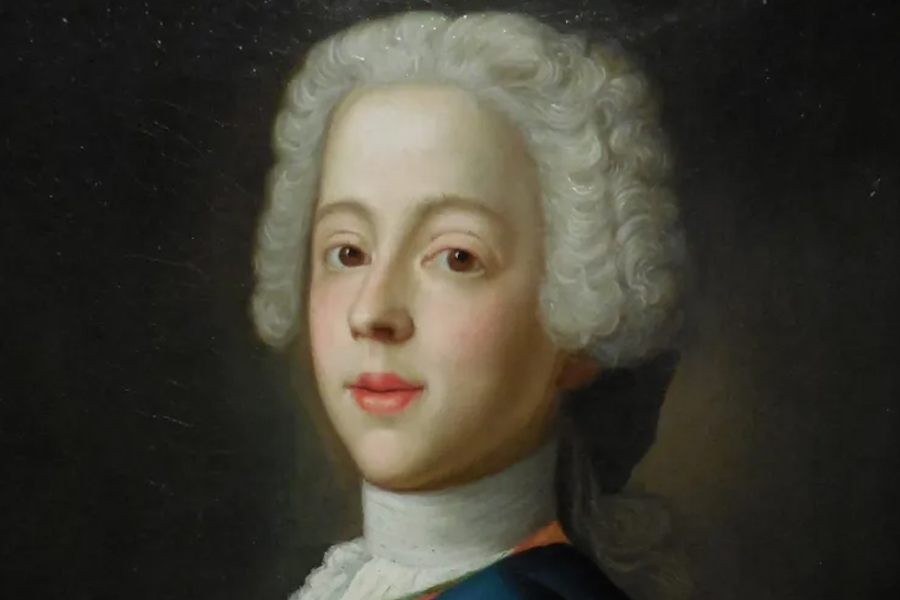
Charles Edward Stuart was born in Rome 1720. Senior son of Old Pretender James Francis Edward Stuart and Maria Clementina Sobieska. His followers believed he was the rightful British successor. The British government considered him a dangerous claimant whose military campaign jeopardised the Hanoverian crown.
His connection with Charles Godefroi was never transformed into a public paternal role. The child remained within the Rohan household, and Charles Edward did not openly claim him. Family members appear to have handled the matter through discreet correspondence rather than public declarations.
The birth was reportedly communicated to James Francis Edward Stuart by Louise de Rohan, Marie Louise’s mother in law. The information was conveyed carefully, without fully exposing the alleged paternity. This caution reflected the fragile balance between affection, secrecy, and dynastic politics.
Charles Edward and Marie Louise did not form a political alliance or Jacobite movement. It was more personal and genealogical than strategic. But the affair united two Sobieski-linked sections of the family. It also illustrated how lords’ private life affected European succession problems.
The Rohan Family
The child’s legal father was Jules Hercule Mériadec de Rohan. The Rohan Guéméné branch was a notable French aristocratic family. Even though Charles Godefroi was too young to inherit, his position gave him a distinguished public character.
Charles Godefroi had an older acknowledged brother, Henri Louis Marie de Rohan, born in 1745. Henri later became Prince of Guéméné and Duke of Montbazon. Unlike the infant Charles Godefroi, he survived into adulthood and continued the public line of the family.
Palaces, military postings, religious offices, and court rituals were the Rohan family’s universe. Their name bore ancient nobility. Even an infant who died could have many names, each representing a family tie or inherited expectation.
| Family member | Relationship to Charles Godefroi | Dates |
|---|---|---|
| Marie Louise de La Tour d’Auvergne | Mother | 1725 to 1781 |
| Jules Hercule Mériadec de Rohan | Legal and acknowledged father | 18th century |
| Charles Edward Stuart | Reported biological father | 1720 to 1788 |
| Henri Louis Marie de Rohan | Older acknowledged brother | 1745 to 1809 |
| Charles Godefroy de La Tour d’Auvergne | Maternal grandfather | 1706 to 1771 |
| Maria Karolina Sobieska | Maternal grandmother | 1697 to 1740 |
| James Francis Edward Stuart | Biological paternal grandfather | 1688 to 1766 |
| Maria Clementina Sobieska | Biological paternal grandmother | 1702 to 1735 |
His Short Life and Burial
Charles Godefroi was baptized under the elaborate name Charles Godefroi Sophie Jules Marie de Rohan. The names Sophie, Jules, and Marie reflected the customs of noble families, where a child could carry several names honoring parents, grandparents, saints, and important relatives.
He died in Paris in late 1748 or on 18 January 1749. The difference between the reported dates may reflect variations in family records and later genealogical accounts. In either case, he lived for only a few months.
He was buried in the Rohan Guéméné family crypt at the Couvent des Feuillants in Paris. The convent was later demolished, but the burial tradition remained part of the family’s history. Marie Louise was eventually buried nearby, reportedly in accordance with her wishes.
Infant mortality was prevalent, thus noble children died with little public ceremony. Charles Godefroi left no career, marriage, correspondence, or politics. His relevance comes almost completely from his remarkable family background.
Marie Louise After the Affair
After the birth and death of Charles Godefroi, Marie Louise continued her life within the French aristocratic world. She maintained her public identity as Princess of Guéméné and remained connected to the Rohan and Stuart families.
Family commitments, religion, philanthropy, and France’s changing environment before the Revolution affected her later years. On September 24, 1781, she died. Later stories have conflated her death with revolutionary events, but the generally recognised date places her death before the Revolution’s most violent years.
Historical literature and television have popularized her narrative. She plays Louise de La Tour in Outlander, set in Paris’ complicated social scene. While history leaves many facts unclear, fiction gives her more narrative prominence. She was at the meeting point of several powerful families and protected their reputation.
Frequently Asked Questions
Who was Charles Godefroi Sophie Jules Marie de Rohan?
The eighteenth-century French aristocrat Charles Godefroi Sophie Jules Marie de Rohan was born in Paris on July 28, 1748. His parents were Jules Hercule Mériadec de Rohan and Marie Louise de La Tour d’Auvergne, but Charles Edward Stuart was usually considered his biological father.
How long did Charles Godefroi live?
He lived for approximately five months. His death is placed either in December 1748 or on 18 January 1749, depending on the account.
Who was his mother?
His mother was Marie Louise Henriette Jeanne de La Tour d’Auvergne, Princess of Guéméné through marriage. She was the daughter of the Duke of Bouillon and a granddaughter of the Polish king John III Sobieski through her mother.
Who was his legal father?
His legal and publicly acknowledged father was Jules Hercule Mériadec de Rohan, Prince of Guéméné. The child was raised in the records and public identity of the Rohan family.
Was Charles Edward Stuart his biological father?
Contemporary family tradition and later historical consensus identify Charles Edward Stuart as his biological father. The relationship was kept private, and the child was not publicly presented as a Stuart.
Who was Charles Godefroi’s brother?
His older acknowledged brother was Henri Louis Marie de Rohan, born in 1745. Henri later became Prince of Guéméné and Duke of Montbazon.
Where was Charles Godefroi buried?
He was buried in the Rohan Guéméné family crypt at the Couvent des Feuillants in Paris. Marie Louise was later buried nearby.
Why is he remembered today?
He is remembered because his brief life connected the Rohan, La Tour d’Auvergne, Sobieski, and Stuart families. His birth also offers a glimpse into the secrecy, dynastic pressure, and personal relationships of eighteenth century European aristocracy.